

Nobody who buys, deploys or uses software can currently see how efficient it is. GreenCode measures a product before and after optimisation and rates it against an ISO-aligned standard, so efficiency becomes something a buyer can ask for and a vendor can prove.
When an organisation buys a dishwasher it is told how much electricity the machine uses. When it buys software it is told nothing at all. IT departments choose on features, price and support, and then inherit whatever performance characteristics the product happens to have. The electricity that inefficient code wastes arrives later as a hosting bill or a hardware refresh, and is absorbed as a necessary cost of doing business.
End users see even less. Someone choosing a phone, an electric vehicle or a system running on domestic solar has no way to tell whether the software inside it is frugal or wasteful. That software decides how long the battery lasts and how much generated power is left for anything else. There is no label, no scale and no shared vocabulary for asking.
The gap matters because the sector is large. Excluding artificial intelligence and blockchain, the carbon footprint of information and communications technology already matches or exceeds that of aviation.
 View full size
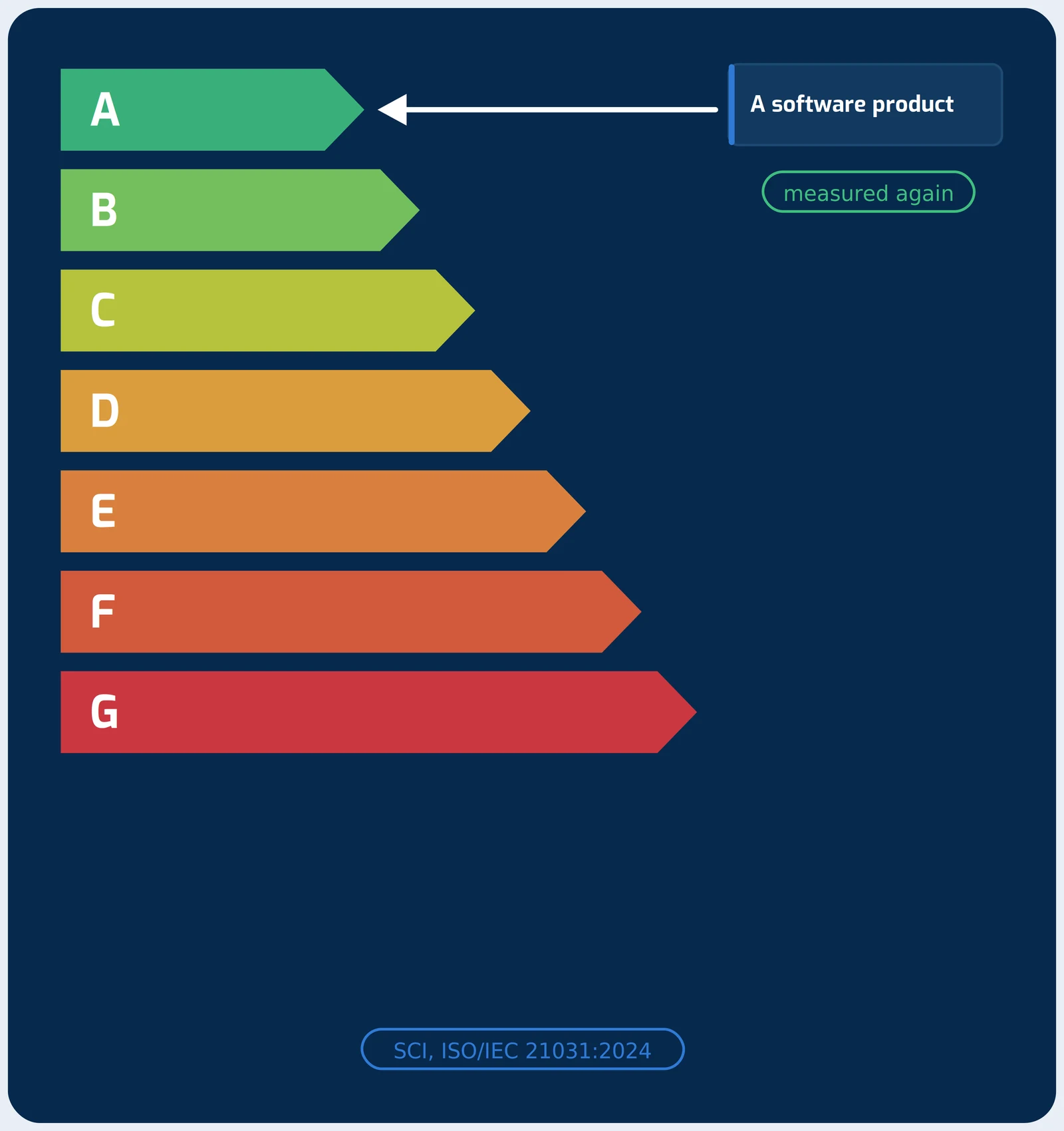
What is missing is a standardised, non-technical way to understand the energy use of a piece of software. The model already exists in the EU energy label, which turned an engineering property into a letter that a shopper, a buyer and a regulator all read the same way.
A software rating has to meet the same conditions. It must rest on a defined measurement method rather than a vendor's own benchmark, be comparable between products that do similar work, be legible to someone with no engineering background, and be capable of being checked by a third party.
GreenCode measures a working system rather than inspecting its source. The pipeline establishes an energy baseline under load, attributes consumption to specific code and infrastructure, refactors the hotspots, and measures again until the gain is verified or the improvement stops. The project targets a net reduction of more than 15% per product processed, with no regression in quality, security or maintainability.
Both measurements are then rated against software carbon intensity, which was adopted in 2024 as ISO/IEC 21031 and aligns with ISO 14064 and the GHG Protocol. Because the method and the standard are fixed, the result can be certified rather than merely asserted. The rating travels with an evidence bundle recording measurement boundaries, assumptions, allocation rules, tool versions and test results, described in more detail under ESG data.
An easy to understand energy-efficiency certificate for a software product is one of the deliverables GreenCode will bring to the market.
A grade on its own changes nothing. A grade that a buyer can put in a specification changes procurement. Four uses are already visible: comparing candidate products, answering tenders that have begun to attach green requirements to IT purchases, supporting sustainability disclosures, and substantiating public claims about a product's environmental performance.
The regulatory backdrop is moving in one direction:
Green claims are the sharpest case. An unsubstantiated efficiency claim becomes a legal exposure rather than a marketing line, and a measured, standards-based rating is exactly the substantiation the directive asks for.
Certification of this kind documents the steps taken as well as the status reached. Each run records what was measured, what was changed, and what the change saved. A company can therefore show a reduction path and not only a current figure.
That distinction matters for anyone making a claim of improvement, for anyone setting a reduction target and needing to evidence progress against it, and for an auditor who wants to see method rather than outcome.
Direct taxation of the carbon emitted by IT is a plausible next step, and several of the regulatory instruments above began as voluntary practice. An organisation that already knows the rating of its software estate, and can show the reduction it has achieved, is in a considerably better position than one starting from an unmeasured baseline.
The certification stage sits in the processing pipeline and benchmarking work package, which rates each software product at the start and end of processing and produces the before and after figures behind the grade. The energy measurement toolkit that those figures depend on is built in the green DevOps and infrastructure assessment work package. The standardisation work package carries the consortium's contributions to the Green Software Foundation's rating and pattern work.
Organisations that want to trial the rating on their own software, or contribute a use case, can reach the consortium through the contact page.