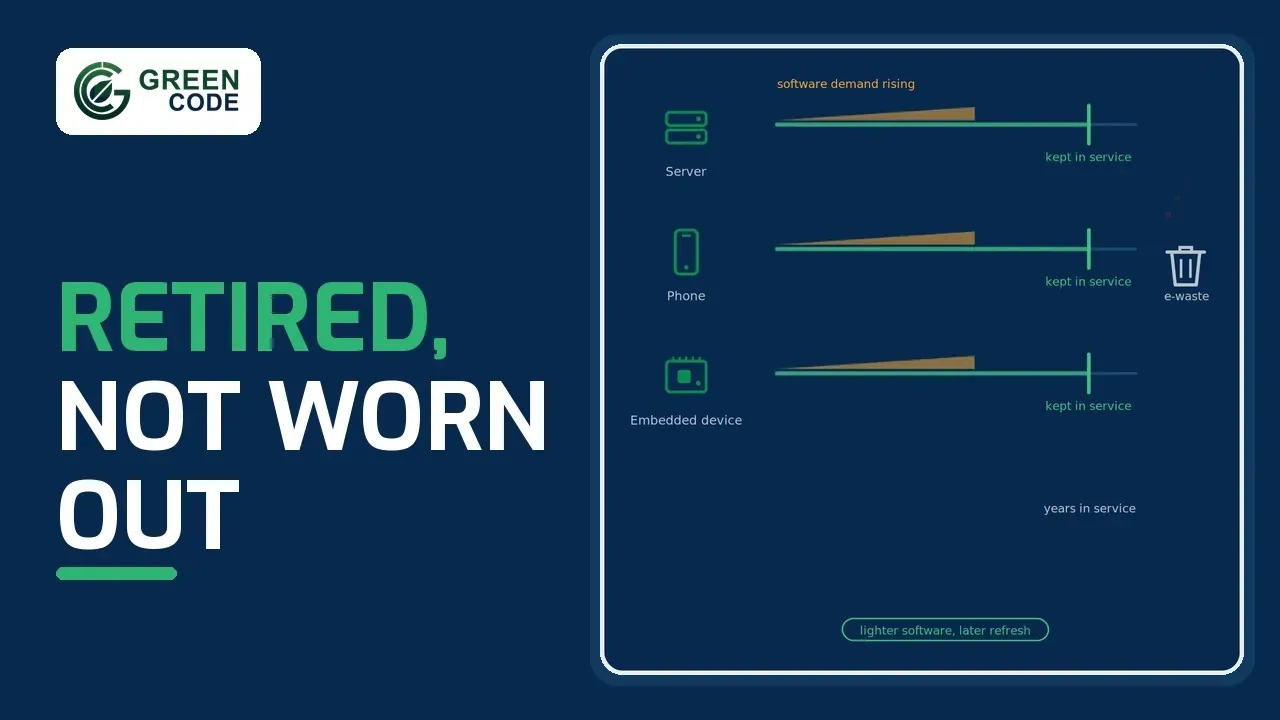
The world produced 62 million tonnes of electronic waste in 2022, and under a quarter of it was documented as formally collected and recycled. Much hardware is retired because the software it runs has grown heavier, not because it has worn out. This film shows how GreenCode measures and reduces the demand software places on hardware, so devices already installed stay in service longer.
Read the full page Watch on YouTube
Most hardware is replaced before it wears out. A server, a laptop, a phone or a set-top box is usually retired because the software it runs has grown heavier, not because the silicon has failed. For a procurement lead that is a recurring capital cost. For a sustainability lead it is embodied carbon and end-of-life waste that never show up on an electricity bill. Every device retired early adds to the waste stream, and every replacement carries the emissions of mining, manufacturing and shipping.
The mechanism is plain: poorly optimised code causes unnecessary processor load and shortens hardware lifespan, not because the machine is worn out, but because a more powerful one is required to run the software. Gains in chip efficiency are absorbed by growth in software demand. The same treadmill runs in the data centre, where servers sit mostly idle, and consolidating the work onto fewer machines reduces not only direct energy but the embodied emissions of buying them. The reverse also holds: optimise the software, and the hardware already installed gets a step change in efficiency.
GreenCode treats hardware demand as a software quality metric, measured rather than assumed. Codebase analysis and AI-assisted refactoring find inefficient code structures and rewrite them so the same functions run with less processor time, memory and network traffic. Infrastructure mining maps an application's live estate, rebuilds it as infrastructure code and benchmarks it under load, so that over-provisioned and under-used hardware becomes visible.
The pipeline tracks the embodied and operational carbon of the code it processes, and rates the software before and after treatment. In aviation research, an automated bench measures the power drawn by different firmware builds on microcontrollers, because efficient code lets the edge hardware in a digital cabin prototype stay compact and cool. And factual energy data on software running on older set-top boxes gives regulators and suppliers evidence about which hardware genuinely needs replacing, and which does not. For an organisation running its own estate, a lighter application means a later refresh date, fewer servers for the same load, and a smaller embodied-carbon line in a sustainability report. For a product company, it means an installed base that stays supported for longer, and customers who are not pushed into replacing working hardware. For a public buyer, it is evidence against ecolabel criteria that ask software to run well on existing equipment. None of this requires new hardware. It requires knowing which parts of the software are driving demand, and fixing them. Reach out to us with the refresh cycle you are trying to slow down, and we will help you understand how GreenCode can keep that hardware in service for longer.
Benefit film
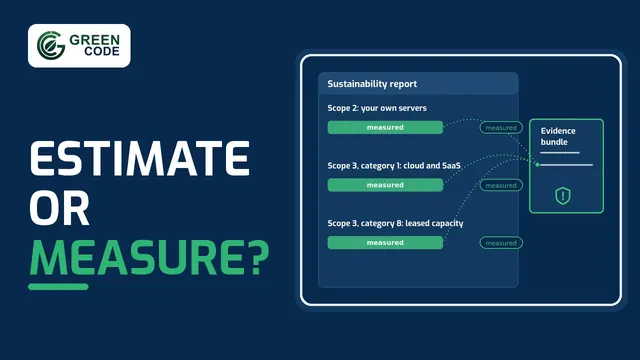
If your organisation reports under the EU's corporate sustainability directive, the electricity your software uses is already in the numbers you sign off, but usually…
Benefit film
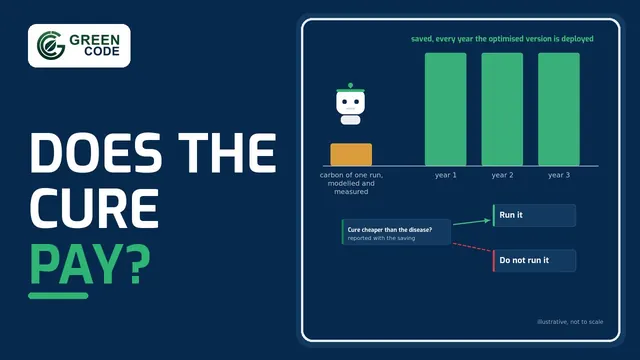
AI is the fastest-growing consumer of energy in the ICT sector, so any tool that uses AI to cut software energy has to prove the cure costs less than the disease.
Benefit film
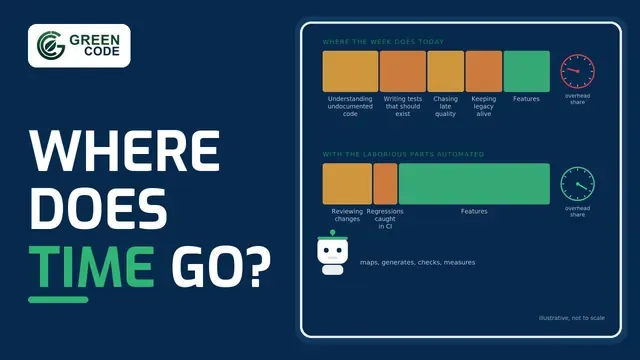
Ask an engineering manager where the team's time goes and the answer is rarely new features.