Software defects are an operating cost as well as a delivery problem, and poor code quality can signal weak performance and wasted energy. This film shows how GreenCode makes quality the first step: missing tests are written, every change is checked for regressions and nothing is merged silently, all before any energy work begins.
Software defects are an operating cost as well as a delivery problem. Unplanned fixes, production regressions and modules nobody dares touch add to technical debt, and to the energy a system burns. The consortium makes the link plain: poor code quality, technical debt and security issues can signal weak operational performance and decreased energy efficiency. So GreenCode treats quality as the precondition for energy optimisation. A cleaner, better tested codebase can be optimised safely, and the tooling that finds energy hotspots catches defects on the way.
The pipeline starts with quality baselining. A codebase is mapped file by file into a searchable index, then analysed against the recognised quality standards, the security guidance, and the green software pattern library. An AI refactoring stage works through the machine-readable findings, the assessment is re-run to confirm that quality scores have risen, and the cycle repeats within configurable limits. Only then does energy benchmarking begin.
Three features of that loop matter. Missing artefacts are generated before code is changed: unit tests and documentation are created where they are absent, so refactoring has a safety net. Every change is checked for regressions against a combined measure of quality issues, security flaws and error rate, which must stay stable or fall. And nothing is merged silently: changes land on an optimisation branch as documented commits, with pull requests for review.
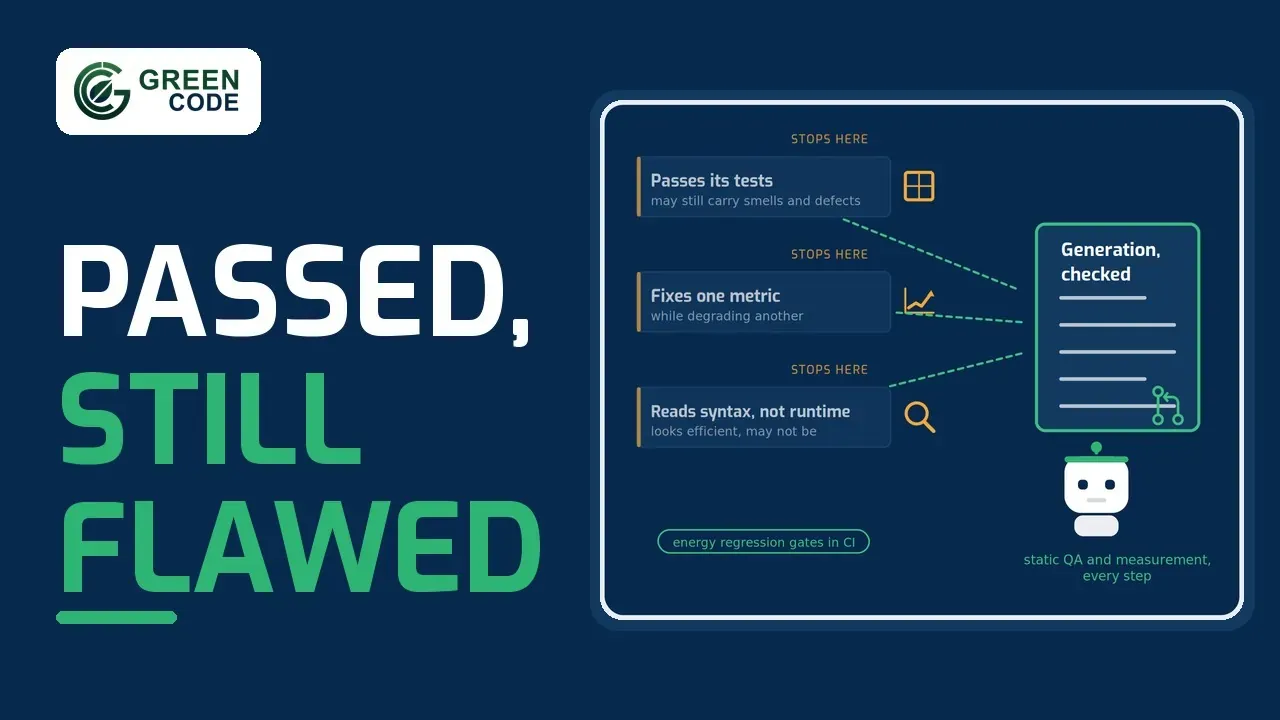
Generative AI has real limits. Software that passes its tests may still carry code smells, maintainability problems or defects, and hallucination, the confident generation of unsupported content, is a persistent quality flaw. AI-generated fixes may improve one metric while degrading maintainability, readability or correctness, and models infer behaviour from syntax rather than runtime, so code that appears efficient may not be. GreenCode's answer is to pair generation with static QA and measurement at every step. Energy regression gates in continuous integration remain rare; the project is building them. For a CTO or a QA lead, the outcome is a codebase with fewer latent defects, current tests and documentation, and an audit trail of what changed and why. Most software in service is legacy, so this matters most for long-lived estates. The evidence bundle at the end of a run records tool versions, diffs and test results, so improvements can be verified rather than asserted. Reach out to us with the codebase you are afraid to change, and we will help you understand how GreenCode can make it safe to work on.
Benefit film
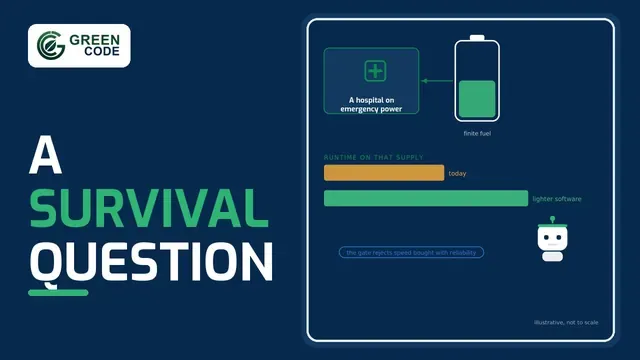
In hospitals, aircraft and electric vehicles, software efficiency is a survival question: a system that draws less power runs longer on whatever reserve is left.
Benefit film
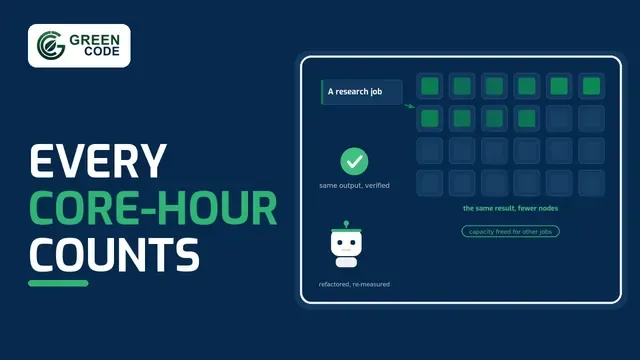
In research computing, a wasteful inner loop is multiplied by every core-hour a job runs, and much scientific software has never been profiled for energy.
Benefit film
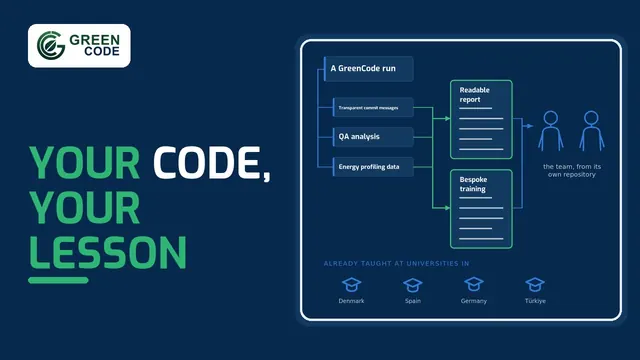
Most software engineers have never been taught how their design choices affect energy use.