When an organisation buys a dishwasher it is told how much electricity the machine uses; when it buys software it is told nothing at all. This film shows what a trustworthy energy rating for software would need, how GreenCode arrives at a grade by measuring a working system before and after optimisation, and what a buyer can do with that grade.
Read the full page Watch on YouTube
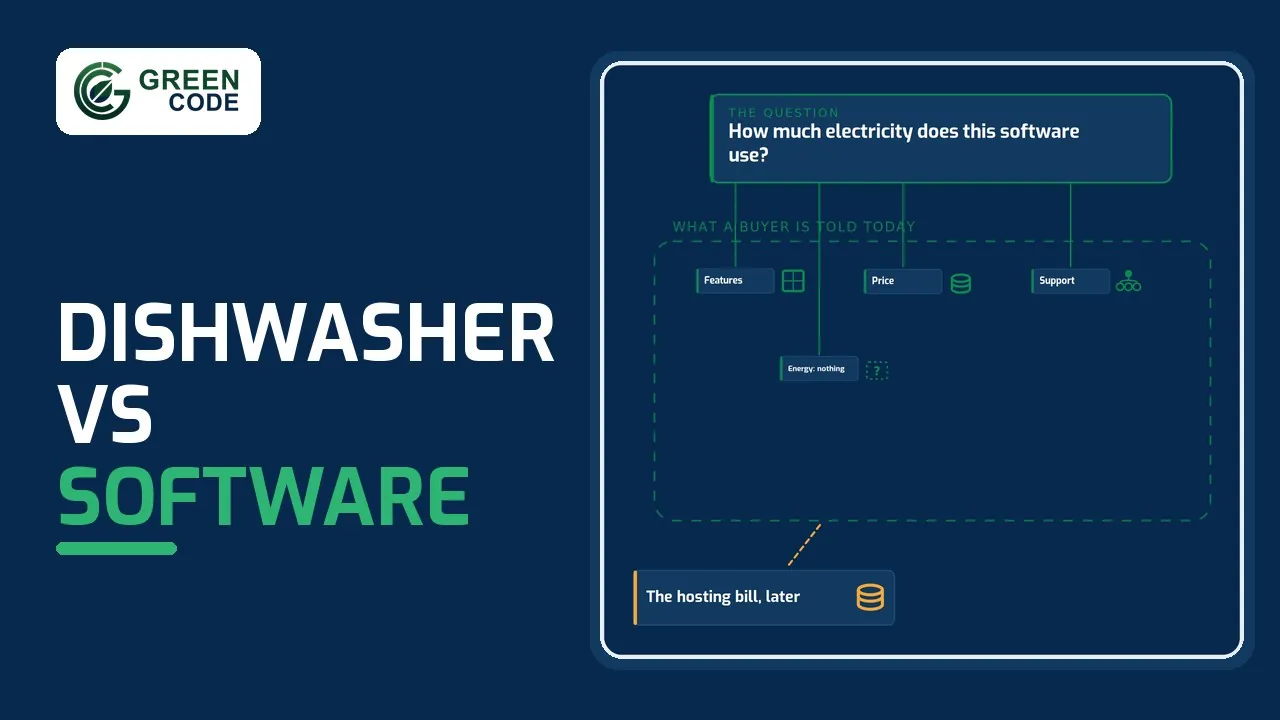
When an organisation buys a dishwasher it is told how much electricity the machine uses. When it buys software it is told nothing at all. Nobody who buys, deploys or uses it can see how efficient it is. So the question a buyer cannot ask is simply this: how much electricity does this software use? What they are shown instead is features, price and support, and nothing whatever about energy. The waste arrives later, as the hosting bill, and as the hardware refresh.
What is missing is a standardised, non-technical way to understand the energy use of a piece of software. The model already exists in the energy label, which turned an engineering property into a letter that a shopper, a buyer and a regulator all read the same way. A software rating has to meet the same conditions: rest on a defined measurement method rather than a vendor's own benchmark, be comparable between products that do similar work, be legible to someone with no engineering background, and be capable of being checked by a third party.
GreenCode analyses the source code and measures the working system. The pipeline establishes an energy baseline under load, attributes consumption to specific code and infrastructure, refactors the hotspots, and measures again until the gain is verified or the improvement stops. Both measurements are then rated against the carbon intensity standard. Because the method and the standard are fixed, the outcome can be certified rather than merely asserted, and the rating travels with an evidence bundle recording the boundaries, assumptions, allocation rules, tool versions and test results.
A grade on its own changes nothing. A grade that a buyer can put in a specification changes procurement. Four uses are already visible: comparing candidate products, answering tenders that have begun to attach green requirements to IT purchases, supporting sustainability disclosures, and substantiating public claims about a product's environmental performance. Green claims are the sharpest case: an unsupported efficiency statement becomes a legal exposure rather than a marketing line, and a measured, standards-based rating is exactly the kind of evidence EU consumer law now expects. Certification of this kind documents the steps taken as well as the status reached. Each run records what was measured, what was changed, and what that saved, so a company can show a reduction path and not only a current figure. That matters to anyone claiming an improvement, anyone evidencing progress against a target, and an auditor who wants to see method rather than outcome. An organisation that already knows the rating of its software estate is in a considerably better position than one starting from an unmeasured baseline. Reach out to us with the product you need to prove, and we will help you understand how GreenCode can turn its efficiency into a grade you can show a buyer.
Benefit film
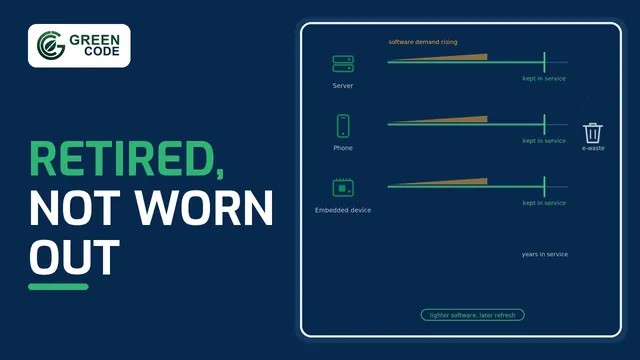
The world produced 62 million tonnes of electronic waste in 2022, and under a quarter of it was documented as formally collected and recycled.
Benefit film
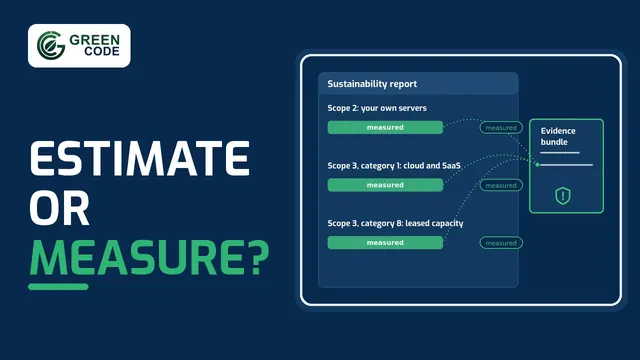
If your organisation reports under the EU's corporate sustainability directive, the electricity your software uses is already in the numbers you sign off, but usually…
Benefit film
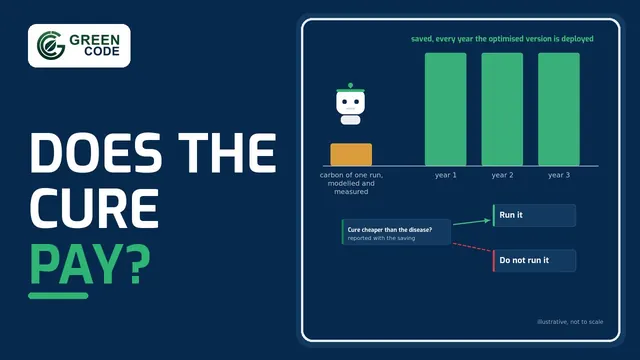
AI is the fastest-growing consumer of energy in the ICT sector, so any tool that uses AI to cut software energy has to prove the cure costs less than the disease.