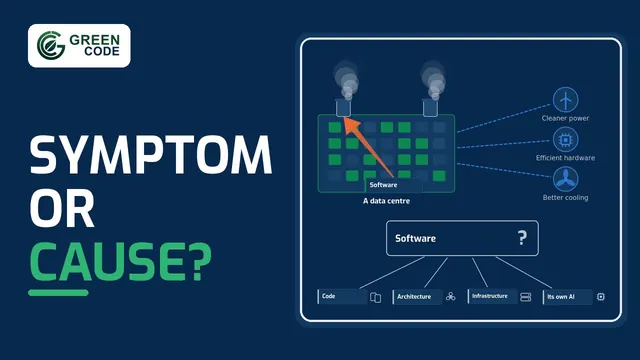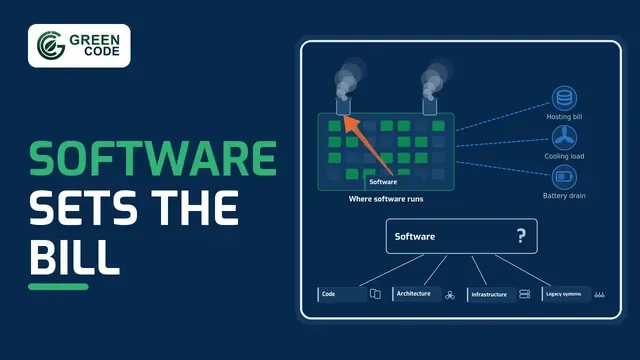
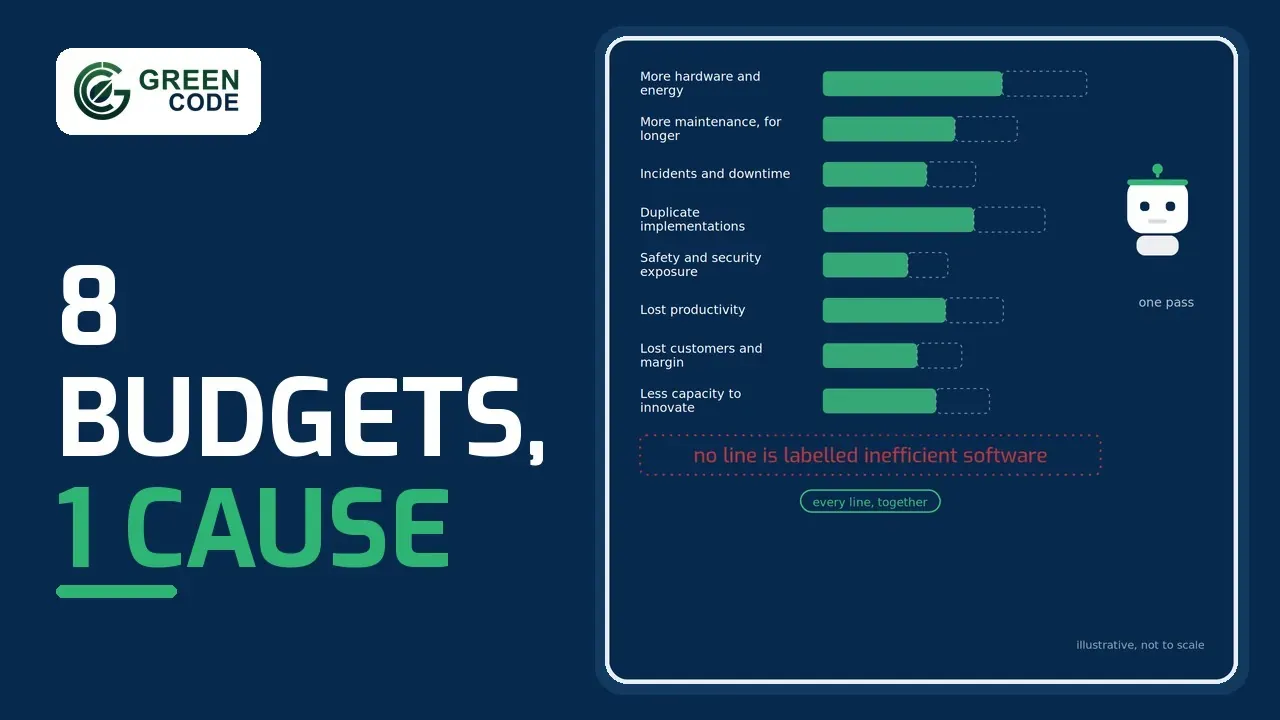
The cost of inefficient software is spread across many budgets, from hosting and energy to incidents, security and lost productivity, so no single line ever shows it. This film shows how those costs build up and how GreenCode reduces them together in one automated pass. The same run produces the evidence for sustainability reporting and an efficiency rating.
Read the full page Watch on YouTube
Software quality is tightly coupled to operational performance, and short delivery cycles keep introducing the defects that break that link. The consequences are well documented, but they rarely appear together in one place, because each lands in a different budget: more hardware and energy for the same workload, more maintenance for longer, performance incidents and the downtime that follows them, security exposure, lost productivity, lost customers, and a reduced ability to innovate. No line of the finance system is labelled inefficient software, which is precisely why the total is rarely challenged. Technical debt has been estimated per line of code, and on a system of a million lines that is a deferred cost carried on the books without ever being recognised as such.
Clearing it by hand is expensive: the assessment, the refactoring itself, the re-testing, the project management on top. And most software in service is legacy, so this is the normal case, not the exceptional one. Hosting is the other half of the picture: cloud charges are reviewed for discounts rather than for cause, and the demand that sets them comes from software treated as a black box.
GreenCode automates the three steps an organisation would otherwise pay people to perform. It baselines the codebase and its infrastructure, measuring quality, performance and energy under load. It refactors with specialised generative AI, generating the tests and documentation the code was missing as it goes. Then it optimises for energy and measures again, with every change returned as a reviewable pull request. Because the work happens in one pass, the savings arrive together: less infrastructure, fewer incidents, longer-lived hardware, and developer time released back into features.
Twenty years ago, checking software for vulnerabilities was specialist consultancy work, commissioned occasionally and priced accordingly. Automated security testing turned it into a standing part of the build; nobody now argues about whether to scan. When the analysis, the refactoring and the measurement are automated and repeatable, keeping a codebase efficient stops being a project and becomes a habit. And the run that lowers cost also produces the evidence: the same measurements feed the sustainability data and the efficiency rating, so compliance is paid for by work that was wanted for financial reasons. Refactoring purely for sustainability is rarely approved. Refactoring that is automatic, that runs inside routine maintenance, and that reduces cost across several budget lines at once does not need a special business case. Lower total cost of ownership protects margin, and decoupling growth from hardware and energy consumption is the substance of the sustainable development goal on decent work and growth. Reach out to us with the cost you cannot itemise, and we will help you understand how GreenCode can bring it down.
Benefit film
The ICT sector's emissions are already comparable to aviation's, and they are projected to keep rising.
Benefit film
Every line of code that runs costs electricity, and a computer or server can only be as energy efficient as its software allows.
Benefit film
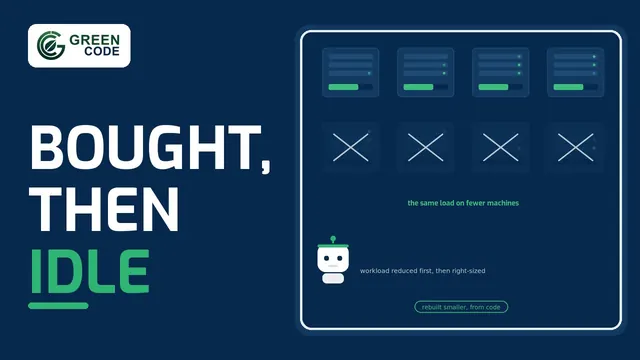
Infrastructure is bought for the moment software demands the most, and by published estimates cloud servers are active only 10 to 30% of the time.