The ICT sector's emissions are already comparable to aviation's, and they are projected to keep rising. Cleaner power and better hardware lower the carbon of each kilowatt-hour; this film shows how GreenCode goes after the cause, energy waste in software, to reduce the number of kilowatt-hours. It also covers how the result is rated and reported.
Read the full page Watch on YouTube
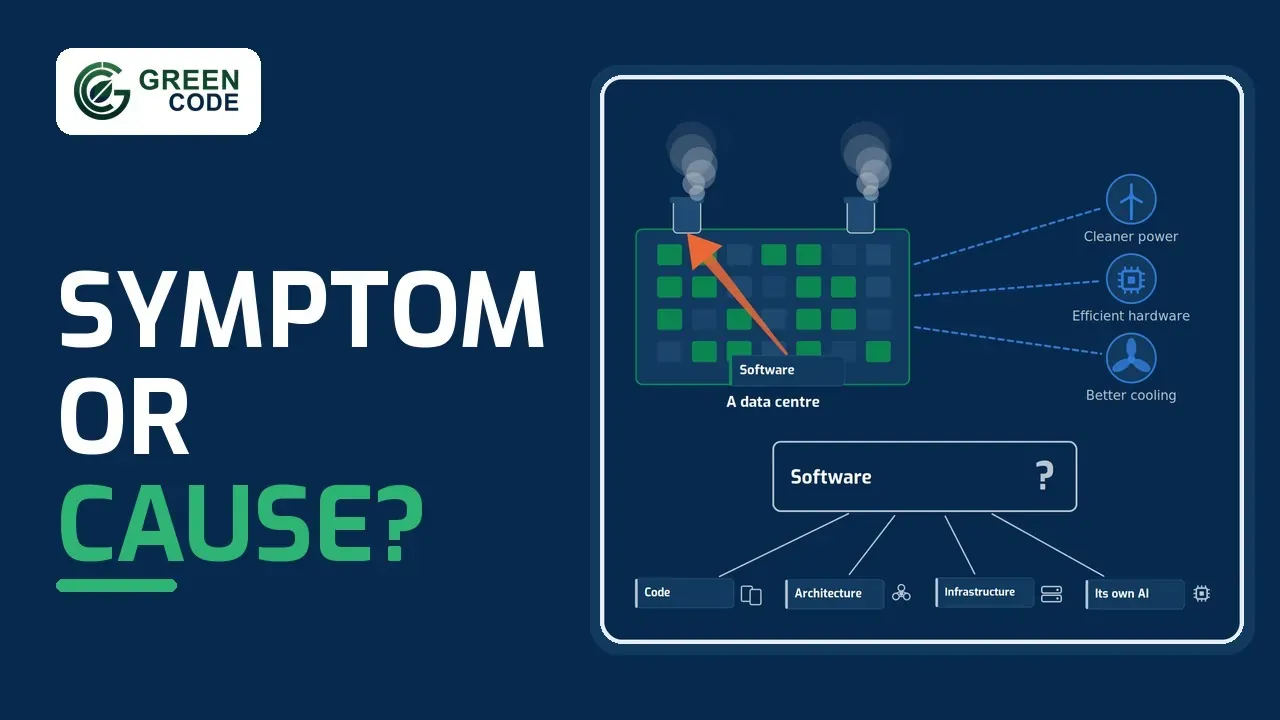
The ICT sector's emissions are already comparable to aviation's, and they are projected to keep rising. Cleaner grid supply, more efficient hardware and better data centre design all treat the symptom: they lower the carbon intensity of each kilowatt-hour. GreenCode's position is that energy waste in software is the root cause of operational emissions in IT, and that is where nobody has looked: the code, the architecture, the infrastructure, and the AI that now runs on top of it. GreenCode lowers the number of kilowatt-hours.
The automated pipeline takes a working codebase, establishes a measured energy baseline, attributes hotspots to specific code and infrastructure, uses specialised generative AI to refactor them, and re-measures until the gain is verified. Changes come back as reviewable pull requests, so a human stays in the loop. This is now a reporting obligation as well: sustainability directives ask companies to disclose their impacts, and an enterprise customer under pressure on its own emissions will ask its software vendors what they are doing about theirs.
The pipeline must also account for its own footprint. GreenCode is built to measure and minimise the energy and carbon of its own operation: energy-efficient AI, and an agentic framework designed to be efficient as well as effective, so that the AI doing the optimising does not cancel out the savings. It is also developing methods that combine energy and performance metrics with the energy mix, so that design reflects how clean the supply is.
On the reporting side, GreenCode builds on the Software Carbon Intensity specification, now an international standard, which defines carbon per functional unit of software and aligns with the greenhouse gas protocol a sustainability disclosure needs. Every product is rated at the start and end of processing. The target is an A rating, meant to work like the energy label on an appliance: a simple signal that buyers and ESG officers can act on. The consortium expects some companies to deploy only A-rated software as a matter of policy.
The scale is where this matters. The same content system runs nearly half the web. The consortium has estimated what a modest efficiency gain across its core and most-used plugins would save once deployed everywhere it is installed, and it is an estimate, not a result. GreenCode leads that work, and the optimisations go back to the community that maintains it. For a sustainability lead, this is a measured, standards-based reduction in the emissions of specific software products, evidence for the reporting, and a rating to show customers and regulators. For a software owner or vendor, carbon turns from a compliance cost into a product attribute: the same optimisation lowers hosting bills and extends hardware life. Reach out to us with the product whose footprint you have to report, and we will help you understand how GreenCode can measure it, reduce it and rate it.
Benefit film
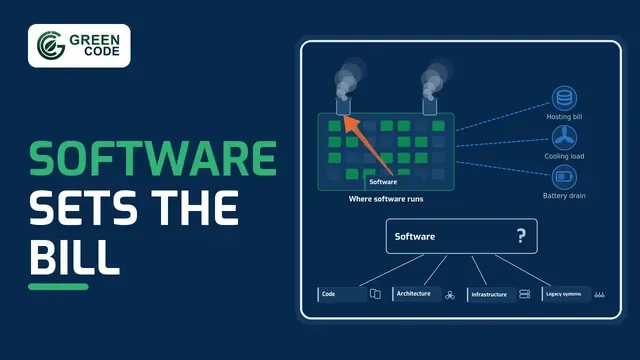
Every line of code that runs costs electricity, and a computer or server can only be as energy efficient as its software allows.
Benefit film
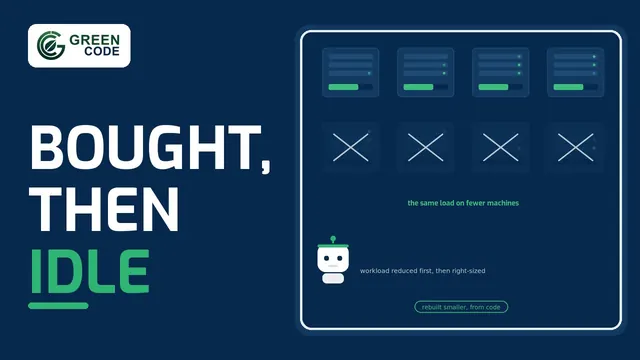
Infrastructure is bought for the moment software demands the most, and by published estimates cloud servers are active only 10 to 30% of the time.
Benefit film
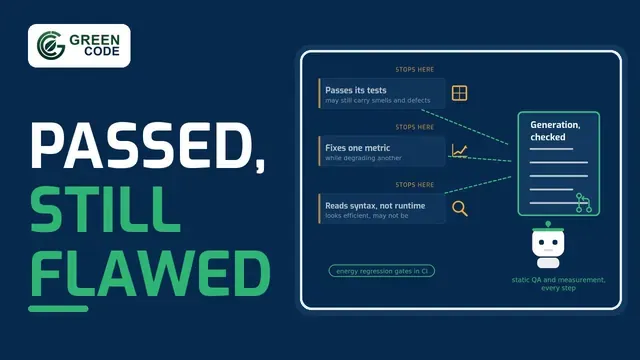
Software defects are an operating cost as well as a delivery problem, and poor code quality can signal weak performance and wasted energy.