Every line of code that runs costs electricity, and a computer or server can only be as energy efficient as its software allows. This film shows how GreenCode measures, improves and verifies the energy of software, fixing quality first and then the energy hotspots. It also shows where the approach is being measured on real enterprise systems.
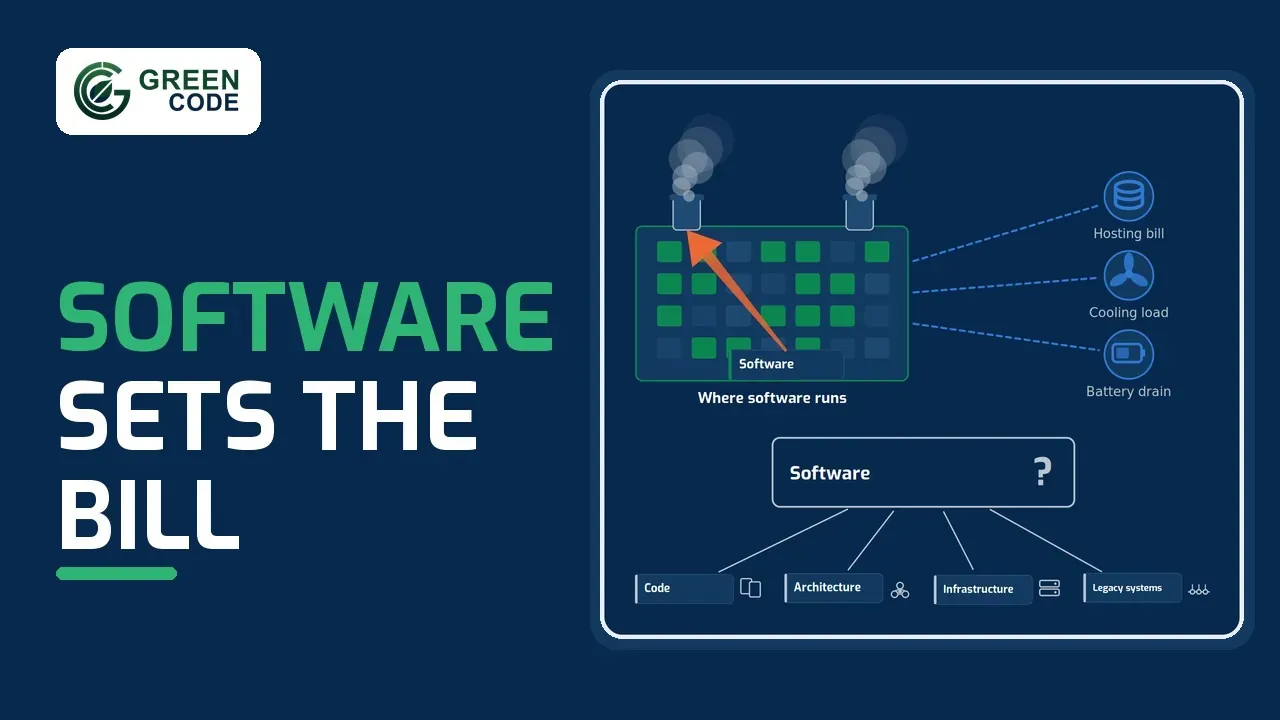
Every line of code that runs costs electricity: as a hosting bill and a cooling load, or as battery drain and heat. The sector's footprint is comparable to aviation's, and energy use is the largest part of it. A computer or server can only be as energy efficient as its software allows. The software is the root cause, and it has mostly been treated as a black box: the code, the architecture, the infrastructure it runs on, and the legacy systems nobody has profiled. GreenCode treats energy the way a mature engineering team handles quality, security or performance: something to measure, improve and verify, rather than estimate.
First a quality baseline: the codebase is indexed, missing documentation and tests are generated, and quality flaws are refactored out. Then energy: the application is deployed on a reconstruction of its own infrastructure, stress-tested and benchmarked, and specialised generative AI refactors the areas responsible. The loop repeats until the measured improvement is good enough, and the optimised code comes back on a branch for human review, with a report on what changed and what it saved.
What distinguishes this from a generic performance tune is when energy is recorded: before any change, after the quality baseline, and after each optimisation pass, all in the same environment. The headline target is a net saving per product large enough that its owners see commercial value, with quality, maintainability and security scores that must not regress.
It is being measured on real enterprise systems. Transaction processing in banking and insurance, where transaction volumes are so high that even small improvements become significant savings. A content platform that runs nearly half of all websites, so an optimisation found once is multiplied across every installation. The direct power draw of optimised software in an operational data centre. And the processor, memory and disk demand of database servers, so that capacity matches need. For a legacy estate, and most software in service is exactly that, this is the low-hanging fruit: systems never designed with energy in mind, running continuously. The saving compounds. Software that needs less compute runs on less hardware, generates less heat, and extends the life of the devices it sits on. It is also cheaper to host, which is usually the argument that gets the work approved. Reach out to us with the system whose energy bill you are trying to cut, and we will help you understand how much GreenCode can take off it.
Benefit film
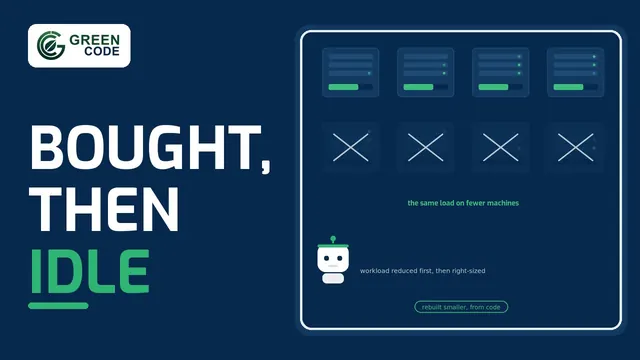
Infrastructure is bought for the moment software demands the most, and by published estimates cloud servers are active only 10 to 30% of the time.
Benefit film
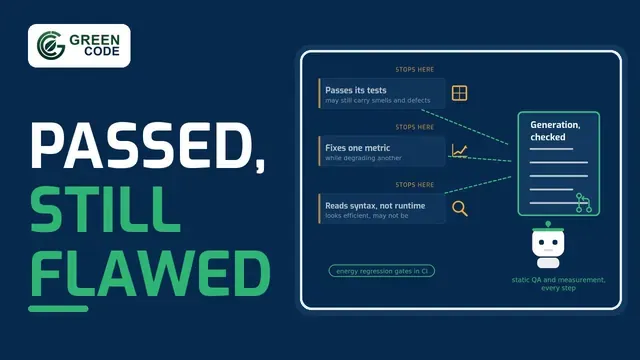
Software defects are an operating cost as well as a delivery problem, and poor code quality can signal weak performance and wasted energy.
Benefit film
In hospitals, aircraft and electric vehicles, software efficiency is a survival question: a system that draws less power runs longer on whatever reserve is left.