
GreenCode processing results in numerous environmental, financial, operational and educational benefits.
It supports, developers, owners and users of software systems achieve more at a lower cost.
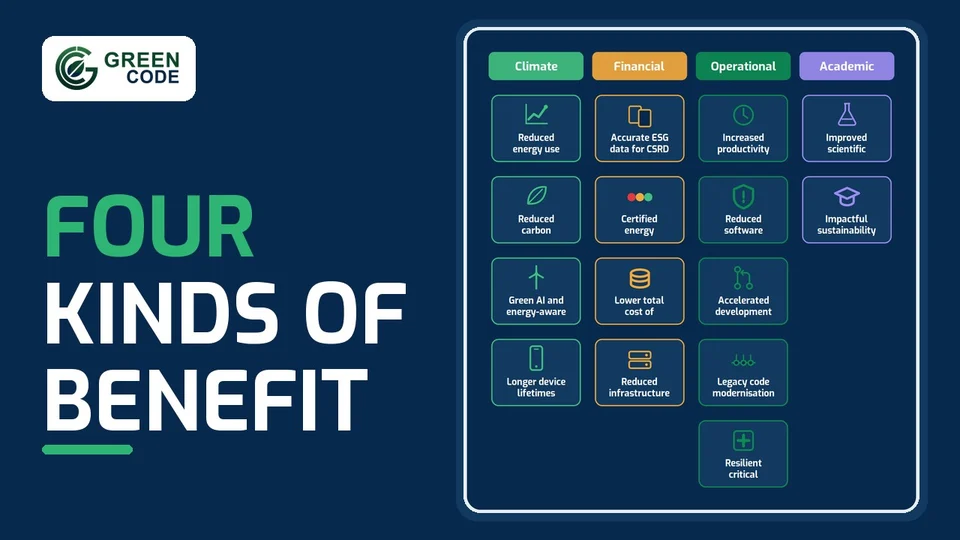

Software is where most IT energy is spent, yet it is the part of the footprint companies report by estimate. GreenCode is building measured, auditable evidence that stands up in CSRD and ESRS disclosures.

GreenCode applies AI-driven measurement and optimisation to research software and the clusters it runs on, cutting energy and cost per result without sacrificing correctness or maintainability.

GreenCode turns the optimisation of a team's own code into training material, and its university partners are teaching energy-aware programming to the next generation of engineers.

Most servers spend most of their time idle, and inefficient software is why more of them get bought. GreenCode maps a running estate, finds where the energy goes, and rebuilds it smaller.

Hardware is usually retired because software outgrew it, not because it failed. GreenCode measures and cuts what software demands of its hardware, so servers, phones and embedded devices stay in service longer.

GreenCode measures the energy a software system actually uses, finds the code and infrastructure hotspots responsible, and optimises them, targeting a saving of more than 15% per project.

GreenCode automates the QA, test and documentation work that developers do by hand or skip, and builds energy measurement into the pipeline, so teams spend less time on maintenance and more on features.

GreenCode treats code quality as the precondition for energy optimisation. Static analysis, generated tests and regression gates cut defects and technical debt before any energy work begins.

GreenCode maps a codebase, generates the tests and documentation it lacks, automates remediation and load testing, and returns reviewable pull requests, so teams spend less time on scaffolding and more on features.

Software energy waste is the root cause of ICT's operational emissions. GreenCode cuts it at source, then rates and certifies the result so the reduction can be reported and relied on.

Nobody who buys, deploys or uses software can currently see how efficient it is. GreenCode measures a product before and after optimisation and rates it against an ISO-aligned standard, so efficiency becomes something a buyer can ask for and a vendor can prove.
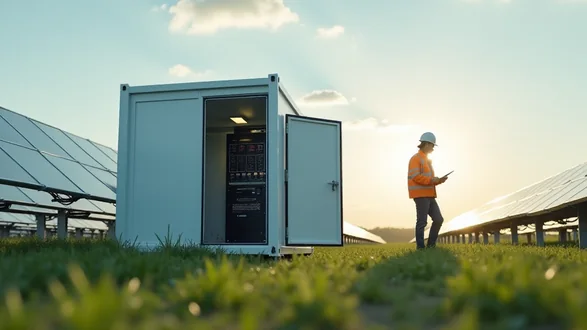
A pipeline that uses AI to save energy has to account for its own. GreenCode measures the carbon of every run, keeps it to a fraction of a per cent of the saving, and schedules the heavy work for when the power is clean.

Legacy systems are most of the world's software and the hardest to change. GreenCode maps them, generates the tests and documentation they never had, and returns modernised, reviewable code instead of a multi-year rewrite.

The cost of sub-optimal software is spread across hosting, maintenance, incidents, security and lost time, so no single budget line ever shows it. GreenCode automates the baselining, refactoring and energy optimisation that reduce all of them in one pass.

Efficient software is resilient software. GreenCode reduces what critical systems demand of their power supply and hardens the code that runs them, so they stay up for longer on backup, depleting or intermittent power.
blocked from digital transformation by legacy systems (Accenture, 2023). GreenCode helps automate the modernisation of legacy applications, enabling transformation.
is the estimated technical debt in a 1-million-line legacy software system (CAST). Enterprise systems are often several million lines long. GreenCode will help eradicate this often-hidden cost.
of e-waste are avoidable by extending device lifetimes for 1 year (Ellen MacArthur Foundation). GreenCode software optimisation may extend device lifetimes by 30% or more.
or 5% of turnover, or 2x total profits/losses made are the maximum fines for CSRD non-compliance in Germany. GreenCode will generate data that can aid accurate CSRD reporting.